
The term “heavy metals” refers to a group of metals and metalloids with a density ranging from 4 g/cm³ to 7 g/cm³, such as lead (Pb), cadmium (Cd), copper (Cu), mercury (Hg), and zinc (Zn). These elements are naturally present in soils, although generally in low concentrations. Their danger lies in the fact that they cannot be degraded by chemical or biological processes and have the ability to bioaccumulate in living organisms and biomagnify throughout the food chain. This means they can reach higher concentrations within organisms than those found in food or the environment, and these concentrations increase progressively at higher levels of the food chain, leading to a wide variety of toxic effects (Ministry for the Ecological Transition and the Demographic Challenge).
In the case of agricultural soils, the presence of heavy metals (HMs) at elevated concentrations (above natural levels) can be toxic to soil organisms, including crops, negatively affecting agricultural quality and yield. High levels of HMs alter various natural soil processes; for example, they can change the pH and affect the availability of essential nutrients for plants, which may hinder their growth or even cause death, thus reducing crop yield and quality. Furthermore, the availability of these heavy metals tends to increase in soils with low pH, making acidic soils more susceptible to contamination (Loyde de la Cruz. L et al., 2023).
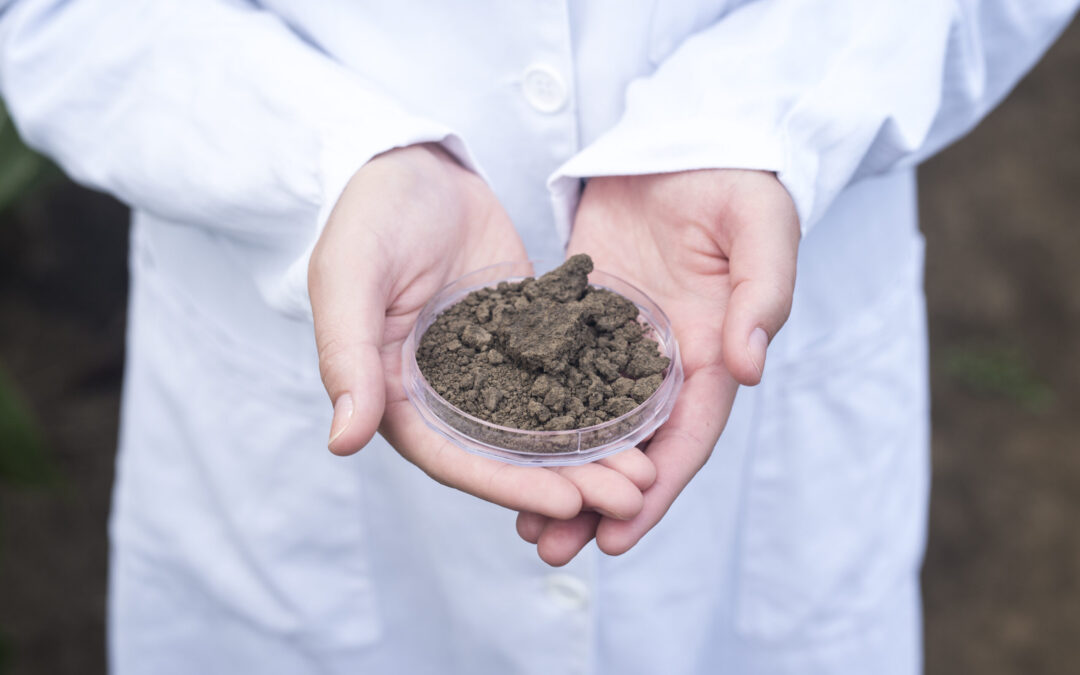
For this reason, before starting trials on plots in the Ribera Baja region, it was decided to carry out post-DANA heavy metal analyses, as there were soil samples collected prior to the environmental disaster. This allowed for the assessment of the event’s impact on the concentration of these elements in the soil.
Table 1 shows the main heavy metals, their natural range in soil, and common sources, although in this case, the source of metals is different. Materials carried by water—such as chemical substances from industries located in the flooded industrial zones, metallic and plastic waste, and vehicles with batteries—were all mobilized by water, either dissolved or physically transported. This dispersion significantly contributed to worsening the ecological impact caused by DANA.
Table 1: Main heavy metals present in agricultural soils, natural ranges, and anthropogenic sources (Loyde de la Cruz. L et al., 2023).
| Element | Natural range (mg·kg-1) | Anthropogenic Sources | ||
| Arsénico (As) | 5─10 | Mining activities, combustion ash, fertilizers, pesticides, herbicides | ||
| Cadmio (Cd) | 0.01─0.7 |
|
||
| Cromo (Cr) | 5-3000 | Mining activities, phosphate fertilizers, sewage sludge | ||
| Cobre (Cu) | 2-100 | Mining activities, waste disposal, sewage sludge | ||
| Mercurio (Hg) | 0.003─4.6 (µg·kg-1) | Mining, coal combustion, irrigation with wastewater | ||
| Níquel (Ni) | 10─100 |
|
||
| Plomo (Pb) | 2─200 | Mining, atmospheric deposition, fertilizers | ||
| Zinc (Zn) | 10─300 | Mining, industrial ash, fertilizers, sewage sludge |
Table 2 shows the heavy metal values found in persimmon farms in Ribera Baja, specifically in the municipality of Sueca, before and after being flooded by the DANA.
Table 2: Total heavy metals in persimmon farms in Sueca before and after DANA (own elaboration).
| BEFORE | AFTER | |
| Cadmium (mg/kg) | 0.16 | <0.01 |
| Cobalt (mg/kg) | 0.79 | – |
| Chromium (mg/kg) | 43.67 | 22.7 |
| Copper (mg/kg) | 21.33 | 21.1 |
| Lead (mg/kg) | 45.67 | 26.7 |
| Zinc (mg/kg) | 55.00 | 63.1 |
| Nickel (mg/kg) | 22.00 | 15.8 |
| Arsenic (mg/kg) | 9.00 | – |
| Molybdenum (mg/kg) | <0.01 | <1.0 |
As shown in Table 2, the concentration of heavy metals in the soil not only did not increase after the flood but decreased in most cases. This reduction may be explained by the fact that the plot was not directly exposed to chemical spills but was mainly affected by the overflow of the Xúquer River as a result of DANA. This phenomenon likely deposited a layer of sediment over the original soil, potentially diluting the existing heavy metals or causing them to leach into deeper soil horizons. Likewise, the washing away of the topsoil layer by the water flow may have removed the uppermost portion of the soil, where the highest concentrations of these elements are typically found.
This finding is also supported by the results of a study conducted by the Institute for the Conservation and Improvement of Valencian Agrobiodiversity, which analyzed agricultural soils in various affected areas such as Sedaví, Massanassa, Forn d’Alcedo, and Castellar L’Oliveral. In this study, the concentrations of heavy metals detected in the samples were within the ranges considered normal, without exceeding established reference levels.
In conclusion, according to the Institute for the Conservation and Improvement of Valencian Agrobiodiversity:
“The alert about potential food contamination was overestimated, with farmers once again bearing the consequences in an already overwhelming and distressing situation. This does not mean the situation is under control, but rather that in this initial sampling and in the specific area analysed, relatively tolerable values were found. However, the soils are damaged, and in the near future, it will be necessary to continue studying soils and crops in the areas affected by DANA. Above all, we must emphasize systems that can biologically remediate potentially contaminated soils and adopt environmentally respectful farming practices, such as organic agriculture” (Raigón. M, 2024).
