

The eco-scheme for the creation of biodiversity areas on arable land, promoted under the Common Agricultural Policy (CAP), aims to foster sustainability and restore natural balance within agroecosystems. Among the practices included, flower strips stand out as a key tool for achieving these goals.
This is precisely what we are working on in GOS ACCESO. At this stage, in collaboration with Rincón de la Abeja, we are carefully selecting the plant species that will make up the flower strips for each crop. This step is essential to ensure that the specific objectives of each cultivation system are effectively met.
What are the benefits of implementing flower strips?
Unlike conventional pest management approaches, these strategies aim to integrate flowering plants that attract and support populations of natural enemies such as lacewings, hoverflies, and parasitoid wasps. By promoting biological control, reliance on fertilisers and pesticides is reduced, leading to more sustainable crop management. Strategically selected and placed flower strips are also highly effective in attracting pollinators, which in turn enhances crop productivity.
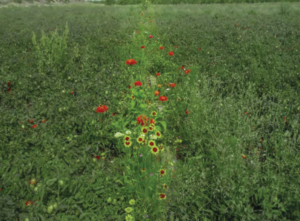
Figure 1: Flower band in an extensive industrial tomato plot studied in 2016. Image from the magazine number 296 Phytoma España (Elizalde et al., 2018)
GOS ACCESO Strategy: Tailored Design for Each Crop
The flower strips will be installed on industrial tomatoes and pears In the case of industrial tomatoes, the focus is on increasing pollinator populations and enhancing pest control. In pear, the objective is more specific: the selected plants were chosen to attract natural enemies of a key pest affecting this crop, pear psylla (Cacopsylla pyri). Additionally, species that attract pollinators will also be included to improve fruit set and overall yield.

